
A winter renovation works well when the house is split into a clean side and a work side, the furnace is protected from dust, temporary heat indoors is electric, and snow, salt and deliveries are planned for. In Toronto, a bin on the road needs a Street Occupation Permit, and construction noise isn’t allowed on Sundays or statutory holidays.
Why winter changes the way a renovation is set up
Plenty of families choose to renovate between November and March. Interior work doesn’t care about rain, trades often have more room in their calendars than they do in spring, and the house is ready by the time the yard calls you back outside. The catch is that a winter house behaves differently from a summer one.
The windows stay shut, so dust has nowhere to go but through the rooms you’re living in. The furnace runs for hours a day, pulling air from every return grille and pushing it back out through every register, including the ones next to the work. Days are short, the driveway may be under snow, and the calendar has a long holiday break in the middle of it.
None of that is a reason to wait. It just means the planning for a winter job covers more than the rooms being renovated. We think about how air moves through the house, how people and materials get in and out, and which weeks the family needs the house to feel normal. If you’re weighing up what to tackle, our home renovations page explains how we scope a multi-room project.
Split the house into a clean side and a work side
The single most useful decision is drawing a line between the part of the house we’re working in and the part you’re living in. On the work side, floors are covered, doorways are closed off with floor-to-ceiling plastic and a zippered door, and anything you care about is moved out. On the clean side, life carries on: at least one working bathroom, somewhere to cook, and bedrooms nobody has to walk through to reach the work.
The route between the two matters as much as the wall itself. Ideally crews come and go through a side or back door that leads straight to the work, rather than through the front hall and living room. If the only way in is through the house, that path gets a hard floor runner and its own dust door at the start of the work area.
In summer, a box fan in a work-zone window can push dusty air outside and keep the zone at slightly lower pressure than the rest of the house. In January that same fan pulls in very cold air, and in a house with an older gas water heater or furnace, a strong exhaust fan can do something worse, which we cover below. So in winter we lean more on tight containment, frequent clean-up and capturing dust at the tool.
- One bathroom and one cooking area kept fully usable
- A separate entrance to the work area where the house allows it
- Dust doors at every opening into the work zone
Protect the furnace, and the air you breathe
A forced-air furnace is the fastest way for renovation dust to reach every room. Before demolition, we cover and tape the return grilles and supply registers inside the work area, so the system isn’t drawing drywall or plaster dust into the ducts. The furnace filter works harder than usual during a renovation, so check it every week or two while the dusty stages are under way and replace it when it looks grey, rather than waiting for the usual schedule.
Humidity swings in both directions in a winter renovation. Heated winter air is dry, but drywall compound, paint, thinset and fresh concrete all release moisture as they cure. If you see condensation running down the inside of the windows, the air is wetter than it should be. Health Canada recommends keeping indoor relative humidity between 30% and 50%, and a cheap hygrometer from a hardware store is the easiest way to know where you are. If a humidifier normally runs in the house, turn it down or off during the wet-finish stages.
If anyone in the house has asthma or is sensitive to dust, tell us before the work starts, because it changes which rooms we close off first and how often clean-up happens.
Temporary heat should be electric in a lived-in house
When a room is opened up to the studs, or an exterior wall is partly open, that space needs heat of its own so finishes cure properly and pipes in the area stay above freezing. In a house where people are living and sleeping, that heat should come from electric heaters. Health Canada is clear that kerosene, propane and oil space heaters shouldn’t be used in enclosed areas unless they’re specifically designed for indoor use, and fuel-burning heaters also add a surprising amount of water vapour to the air.
The other winter risk is less obvious. Natural Resources Canada explains that a closed-up winter house, with exhaust fans running, can drop below the outdoor air pressure, which can pull combustion gases back out of a chimney-vented furnace or water heater instead of up the flue. A big exhaust fan in a sealed work zone adds to that pull. Make sure there’s a working carbon monoxide alarm in the house before the work begins, and if your furnace or water heater vents through a chimney, keep strong exhaust fans out of the plan.
Snow, salt and the route in and out
Every bag of thinset, sheet of drywall and length of trim has to travel from the street to the room, and in winter that route needs to be clear, salted and safe before the first delivery. We agree with you early on who clears the driveway, walkway and steps on work days, especially after an overnight snowfall, because a crew carrying materials up an icy front step is how accidents happen.
Salt and slush are hard on new finishes. Grit on boots scratches hardwood, and salty meltwater leaves white marks on tile and grout and can stain unsealed stone. We set up a boot-off area or shoe covers at the door, and hard protection over any finished floor on the route. Expect that protection to stay down until the last day, even if it isn’t pretty.
We want materials to arrive dry and stay dry. Drywall, flooring and trim stored in a cold garage or on a snowy porch can pick up moisture, and flooring in particular needs time inside at normal room temperature before it goes down. We’ll ask you for a dry, heated spot inside the house where our deliveries can sit until they’re needed.
- A cleared, salted path from the street to the work door
- Floor protection along the whole route, not just in the work room
- A heated indoor spot for materials to sit before installation
Bins, parking and the street
Most renovations need somewhere to put debris. A bin on your own driveway is the simplest answer, though in winter it can block snow clearing and leave you parking on the street. Once a bin, materials or equipment sit beyond your property line, on the boulevard, sidewalk, road or a public lane, Toronto requires a Street Occupation Permit for the time it’s there. That applies in Etobicoke, North York and Scarborough as well, since they’re all part of the City of Toronto.
A bin on a snowy road also gets in the way of the plows, and a narrow street with banks on both sides may not have room for one at all. On tight downtown streets and laneways, smaller bins swapped more often, or bagged debris collected by the bin company, can work better than one large container.
Outside Toronto, cities such as Mississauga, Brampton and Vaughan run their own road occupancy rules, so ask the city before a bin lands on municipal property. Wherever you live, it’s worth a quick word with the neighbours about trucks, deliveries and where the crew will park.
Planning the work around the holidays
The holiday break is the one part of a winter renovation you can plan for months ahead. In Toronto, the noise bylaw doesn’t allow clearly audible construction noise on weekdays from 7 p.m. to 7 a.m., on Saturdays before 9 a.m. or after 7 p.m., or at any time on Sundays and statutory holidays such as Christmas Day, Boxing Day, New Year’s Day and Family Day. Other GTA cities set their own hours.
| What you want | How to plan for it | Worth knowing |
|---|---|---|
| The house usable for hosting in late December | Schedule demolition and the dustiest stages for early in the job, and agree a date when the work side is cleaned, closed and made safe before guests arrive | Finishes left half-done over a break, like unsealed grout or unpainted drywall, are better left closed off than rushed |
| A quiet break with no crews in the house | Agree the last working day before the holidays and the first one after, and make sure heat, water and power are fully restored for the break | Pipes in an opened exterior wall need to stay warm while nobody is working, so temporary heat may stay on |
| Work starting in the new year | Use December for decisions: finishes, fixtures and the order of the rooms, so materials are on site when the crew arrives | Many suppliers slow down over the holidays, so place orders for anything with a long lead time well before Christmas |
Short days and a house that still feels like home
By December the light is gone by late afternoon, which matters if you work from home, have young kids with early bedtimes or simply want a quiet evening. We go through how the working day will run with you: when our crew arrives, when the loud work happens and when the house is yours again. We can usually group noisy jobs like demolition, cutting tile and running compressors into the middle of the day.
Think about the small things that make a long renovation easier to live with. A temporary coffee and toast station on the clean side, a known spot where the crew leaves notes and keys, and a weekly five-minute walk-through to look at what’s done and what’s next all help. If the kitchen is part of the work, a hot plate and a microwave in another room beat a month of takeout.
And if something about the setup isn’t working for your household, such as the dust door in the wrong place or a noisy job clashing with a standing work call, tell us early. It’s much easier for us to adjust in the first week than in the sixth.
Planning a renovation this winter
Start with the scope, then read the guides that fit your project. If you’re comparing contractors, the estimate checklist helps you line up quotes properly.
A closer look at the work
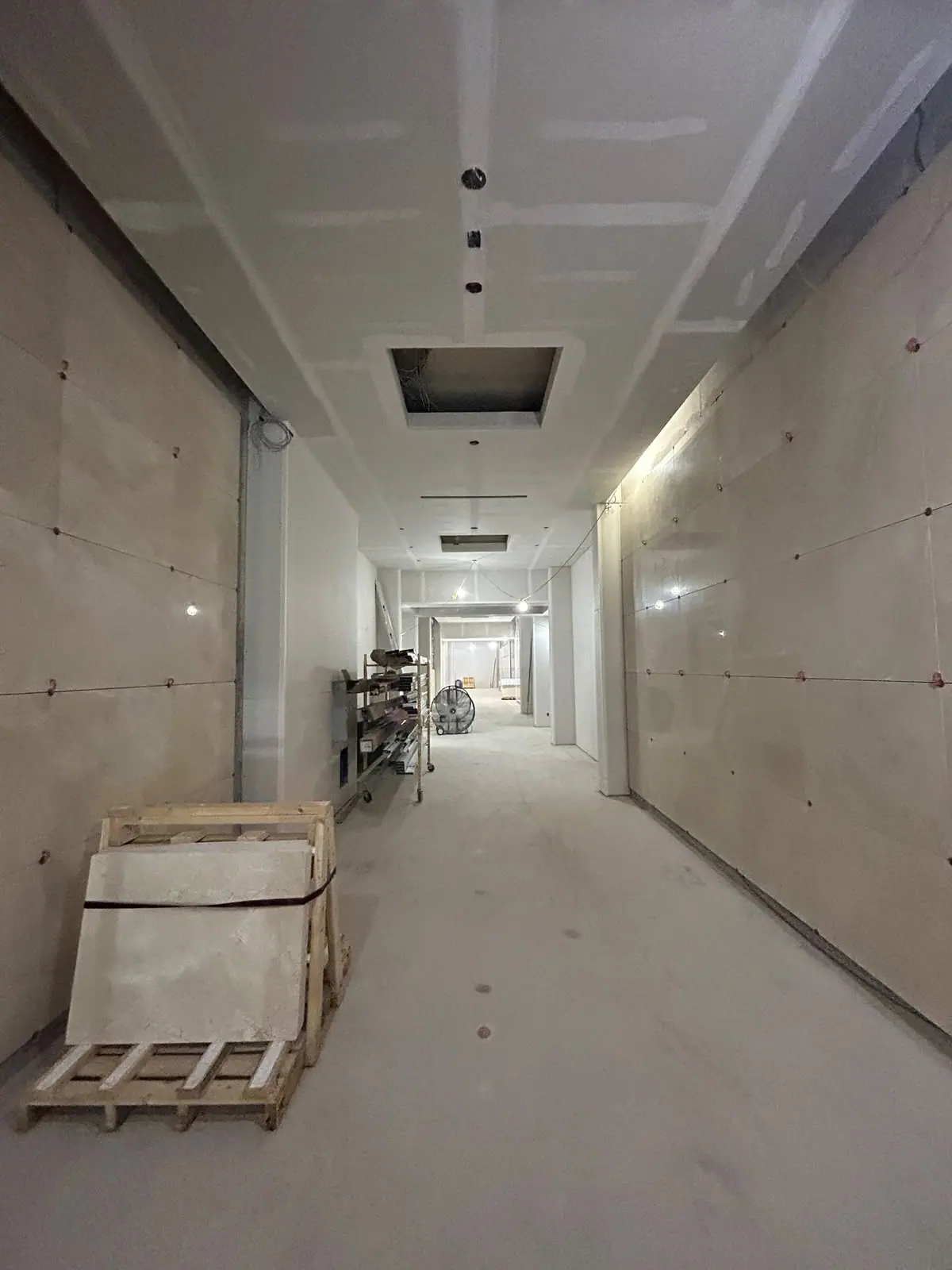
Drywall corridor in progress
An interior corridor with installed drywall, visible joint compound and unfinished ceiling openings.
View project photos →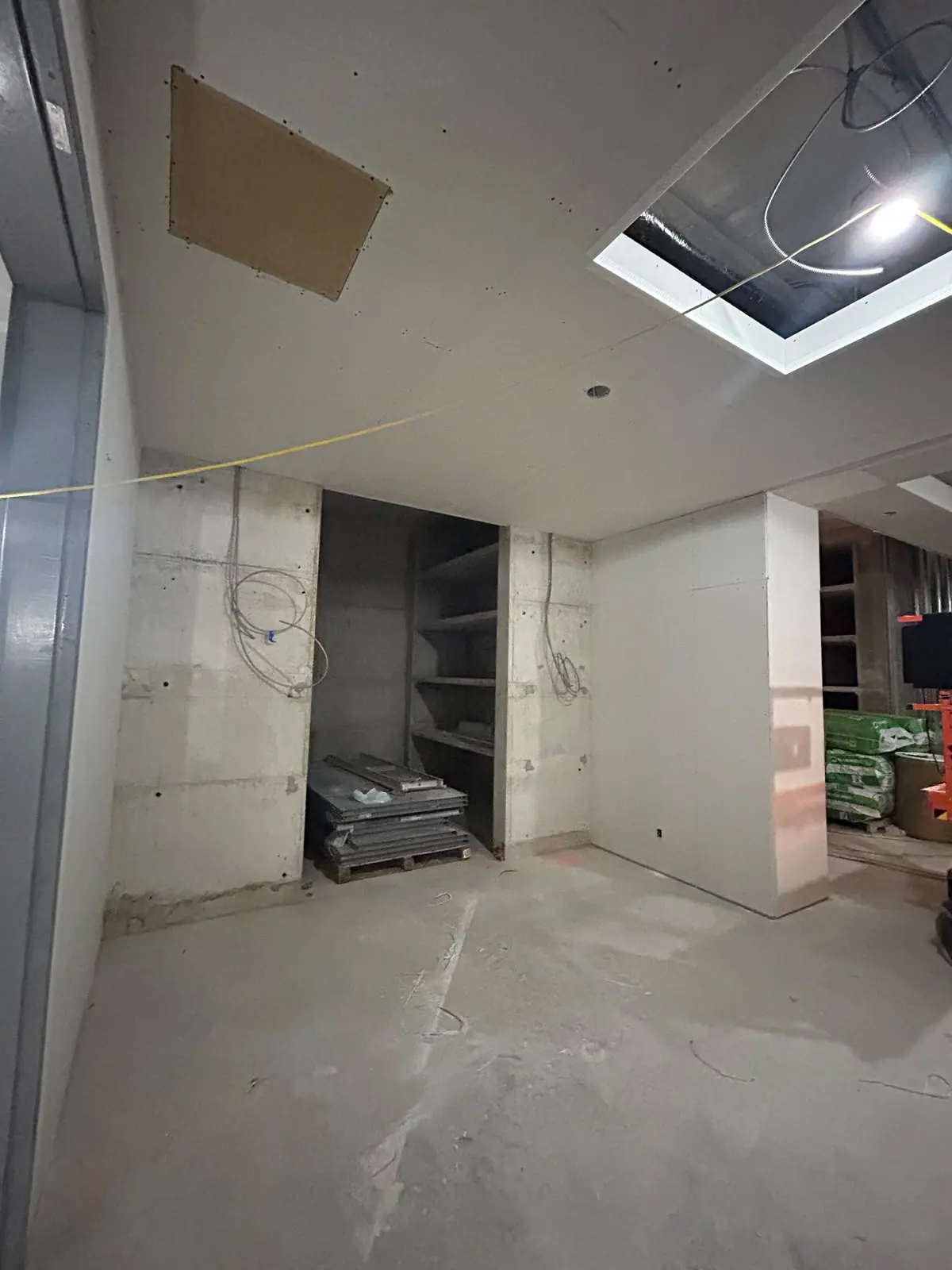
Interior build-out stages
Interior construction photos showing ductwork, insulated metal studs and drywall work in progress.
View project photos →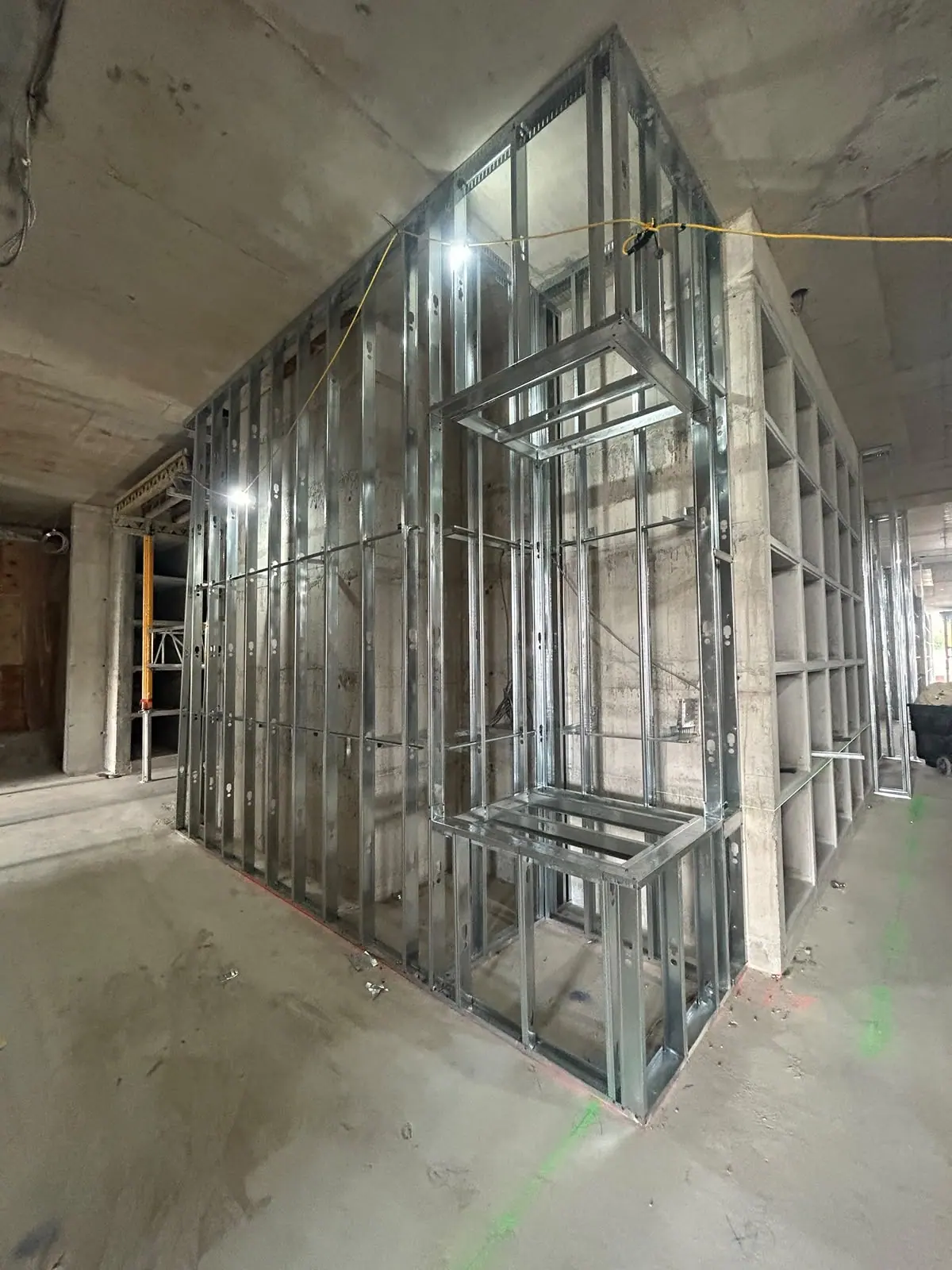
Interior metal-stud partition framing
Metal-stud interior partitions and a framed opening before wallboard installation.
View project photos →Frequently asked questions
Is winter a bad time to renovate in Toronto?
No. Interior work goes ahead in any weather, and many families like having it done before spring. Winter just needs more planning around dust with the windows shut, temporary heat, snow on the access route and the holiday break.
Do I need a permit for a disposal bin in Toronto?
Not for a bin that stays on your own driveway. If the bin, materials or equipment sit beyond your property line, on the boulevard, sidewalk, road or a public lane, Toronto requires a Street Occupation Permit for that time.
Can contractors work on statutory holidays in Toronto?
Not noisily. Toronto’s noise bylaw doesn’t allow clearly audible construction noise at any time on Sundays and statutory holidays, or on weekdays from 7 p.m. to 7 a.m. Quiet tasks aside, plan the work around those days.
How do I stop renovation dust getting into my furnace?
Cover and tape the supply registers and return grilles in the work area before demolition, keep the work zone sealed with dust doors, and check the furnace filter every week or two during the dusty stages, replacing it as soon as it looks grey.
Further information
Read next
Project planning
How to compare renovation estimates without missing the scope
A practical checklist for comparing inclusions, allowances, exclusions and change procedures before choosing a renovation proposal.
Read the guide →Project planning
Drafty house? Fix air leaks and insulation while the walls are open
Fall is when drafts show up. If you’re renovating, open walls and ceilings are the cheapest moment to air-seal and insulate, and the order you book things in decides whether energy rebates still apply.
Read the guide →Project planning
A fall checklist to keep water out of your basement before the spring thaw
Leaves, frozen downspouts and spring meltwater are when GTA basements take on water. Work through this checklist in October and November, while the ground is still soft.
Read the guide →Let’s talk about your project.
Tell us about your plans, property and preferred timing.