
Before the first snow, clear leaves from the board gaps, move planters and rugs that trap water, and check the railings and stairs. Through the winter, use a plastic shovel, push along the boards and use only the ice melt your board maker approves. Brands disagree on rock salt, and it is hard on wood. In spring, rinse the deck and look it over.
Late fall: get the leaves off before the snow lands
The most useful thing you can do for a deck this time of year takes about an hour with a broom. On the old decks we take apart, the worst boards are usually the ones where leaves and snow sat the longest. Wet leaves packed into the gaps between boards stop water from draining through, and once snow sits on top, that soggy layer stays put until April. On wood it leads to dark stains and soft spots. On composite it leaves marks and gives mildew a place to start.
Sweep the whole surface, then run a putty knife or a thin stick along any gaps that are still packed. Pay extra attention to the strip right against the house, under the downspout and in the corners where leaves collect. If the gutter above the deck overflows, clean it too, because a gutter that spills in a thaw will coat the deck in ice by morning.
If you can see under a low deck, look for leaves and branches piled against the posts or the house. A pile like that holds moisture against wood that is meant to dry out between rains. While you are down there, check that water still runs away from the house rather than pooling under the deck. If it pools, tell us when we next look at the deck, because standing water around footings is what frost works on.
- Sweep and clear the board gaps
- Clean the gutter and downspout above the deck
- Look underneath for piled leaves and standing water
Move what traps water: planters, rugs and furniture
Anything that sits flat on the boards for five months holds water underneath it. Planters are the worst offenders. A pot left in one spot all winter often leaves a ring on composite and a soft, discoloured patch on wood. Empty the pots you are not overwintering, and lift the rest onto pot feet so air can get underneath.
Outdoor rugs do the same thing over a much bigger area. Roll them up and store them dry. Furniture can usually stay out, but stack chairs or turn them so their feet are not sitting in meltwater, and put cushions away. If you cover the furniture, use covers that breathe and tie them down; a loose cover in a January wind can scrape across the boards or end up in the neighbour's yard.
The same goes for firewood, bins and storage boxes. Keep them off the deck if you can, or raise them on something that lets water drain away.
A quick safety check of railings, stairs and posts
Icy stairs and a loose railing are a bad combination, so check them before the snow arrives. Grab each railing post and push it firmly. A little flex is normal on some systems; a post that rocks at its base is not. Walk the stairs and feel for treads that move, then look at where the stringers meet the deck and the ground.
Press a screwdriver into any board that looks dark or feels soft, especially near the house and around the stairs. If the tip sinks in easily, the wood is rotting. Pop down any nails or screws that have lifted, since a raised head catches a shovel blade and a boot.
Some things you can fix in an afternoon: a loose screw, a lifted nail, a cracked board that can be swapped. Others mean the structure needs a proper look, such as a soft area near the ledger board on the house, posts that have rotted at the base or a stair that has pulled away. If you find one of those, keep everyone off that part of the deck and let us assess it before you use it again. Our deck building page explains how we decide between a repair, refinishing and a rebuild.
Shovels and ice melt: what the board makers say
The right ice melt depends on what your deck is made of, and the major composite brands don’t agree with each other. If you are not sure which product you have, check your original paperwork or the brand stamped on a spare board, then follow that maker's care guide.
| Deck boards | Snow removal | Ice melt | Afterwards |
|---|---|---|---|
| Trex composite | A plastic shovel, used with care. Trex says never to use a metal shovel and that shovel scratches are not covered by its warranty. A broom works for light snow. | Calcium chloride or rock salt, according to Trex’s care guide. | Rinse it off when it is first practical. |
| TimberTech composite and capped polymer | A plastic shovel, or one with a rubber blade. TimberTech warns against metal shovels and plastic shovels with a metal edge. | Calcium chloride. TimberTech says to avoid rock salt, tinted ice melts, sand and ice-chipping tools. | Clean off any white residue once the weather allows. |
| Pressure-treated wood or cedar | A plastic shovel, pushed along the boards so the edge doesn’t dig into the grain. | TimberTech’s winter advice warns that rock salt can speed up erosion on wood decks, so use it sparingly if at all. | Rinse in spring and check whether the finish needs renewing. |
Shovel with the boards, not across them
Push the shovel in the same direction the boards run. Going across them catches the blade on every board edge, which chips wood and scuffs composite. Leave a thin layer of snow rather than scraping down to the surface; it melts on its own and saves the boards. We would much rather see a little snow left behind than a deck full of chipped edges in April.
Clear in a sensible order. Do the path from the door to the stairs first, then the stairs themselves, then whatever else you use. Throw the snow off the open side of the deck and away from the house, never back against the wall. Snow piled against the siding and the ledger board melts straight into the spot where a deck is most likely to rot.
Don’t chip at ice with a shovel edge, an axe or a scraper. Let the right ice melt do the work, or put down a mat on the main path if your board maker allows it and lift it again when the weather turns.
Heavy snow, drifts and older decks
A properly built deck is designed to carry snow, and TimberTech says the moisture and weight won’t damage a properly installed deck of its boards. Clearing everything after every storm isn’t required. Some decks deserve more attention, though.
If your deck is old, was built before you owned the house or has never had a permit, you don’t really know what it was designed for. Wind piles drifts against the house and in the corners, and a roof edge above the deck can dump a heavy load of wet snow in one spot. After a big storm, clear those areas on an older deck rather than leaving a metre of packed snow sitting there until March.
Covered decks need watching too. Snow sliding off a roof can land on the stairs or at the bottom of them, right where people walk. Clear that landing first.
Winter is also when frost shows you which footings are too shallow. A door that suddenly rubs, a gap opening between the deck and the house, or a stair that no longer meets the landing evenly can all mean a footing has lifted. Make a note of it and have it checked in spring rather than forcing the door or the stairs. When we look at a deck like that, the footings are the first thing we check.
Barbecues and hot tubs in the cold
Plenty of people barbecue all winter. Keep a clear, shovelled path to the grill so you are not carrying hot food across ice, and brush snow off the lid and controls before you light it. Never move a barbecue into the garage or another enclosed space to get out of the weather. It belongs outside in open air, whatever the temperature.
Hot tubs bring water and steam onto the deck all winter. Splashes and drips freeze into ice around the tub, so clear that area often and use only an ice melt your board maker approves. Keep the cover on and fastened between uses, and keep the path from the door clear. If the tub sits on the deck itself, any sign of sagging or a change in how the deck feels around it is worth having looked at, because a filled tub is far heavier than anything else up there.
Spring: what to look at once the snow is gone
When the last of the snow melts, give the deck a proper rinse. Both Trex and TimberTech say to clean off ice melt residue once the weather allows, and a hose with a soft brush and mild soap handles most of it. Avoid a pressure washer on composite unless the maker’s guide says it’s acceptable, and keep it gentle on wood.
Then walk the deck again with fresh eyes, the same way we do on a spring visit. Look at the boards for cracks and soft spots, the railings for anything that worked loose, and the stairs and landings for movement. Check the gap between the deck and the house and whether any posts have lifted or tilted. Spring is when you find out what the winter did.
Wood decks often need a fresh coat of stain every few years, and late spring into early summer is the usual time, once the wood has dried out. If the boards are grey and rough, sanding comes first. When sheila wright had her large deck refinished with us, she wrote that “the sanding was done exceptionally well,” and that preparation is most of what makes a new stain last.
If what you find goes beyond maintenance, our guide to planning a deck over the winter walks through the decisions to make before a spring rebuild.
More on decks
Repairs, refinishing and new decks, plus photos of decks we have built around the GTA.
A closer look at the work
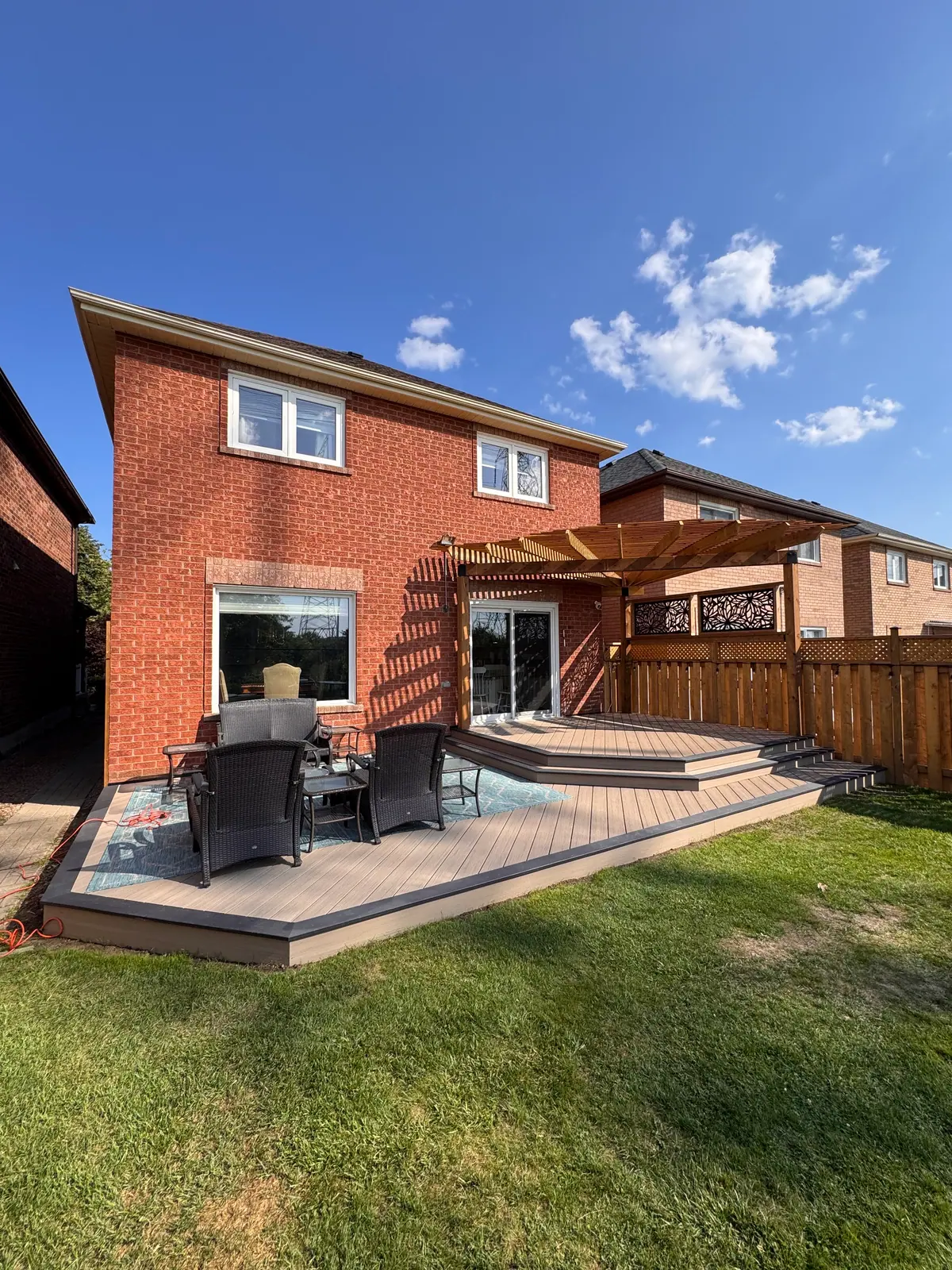
Backyard deck and pergola
A broad backyard deck with steps, a pergola and room for outdoor seating.
View project photos →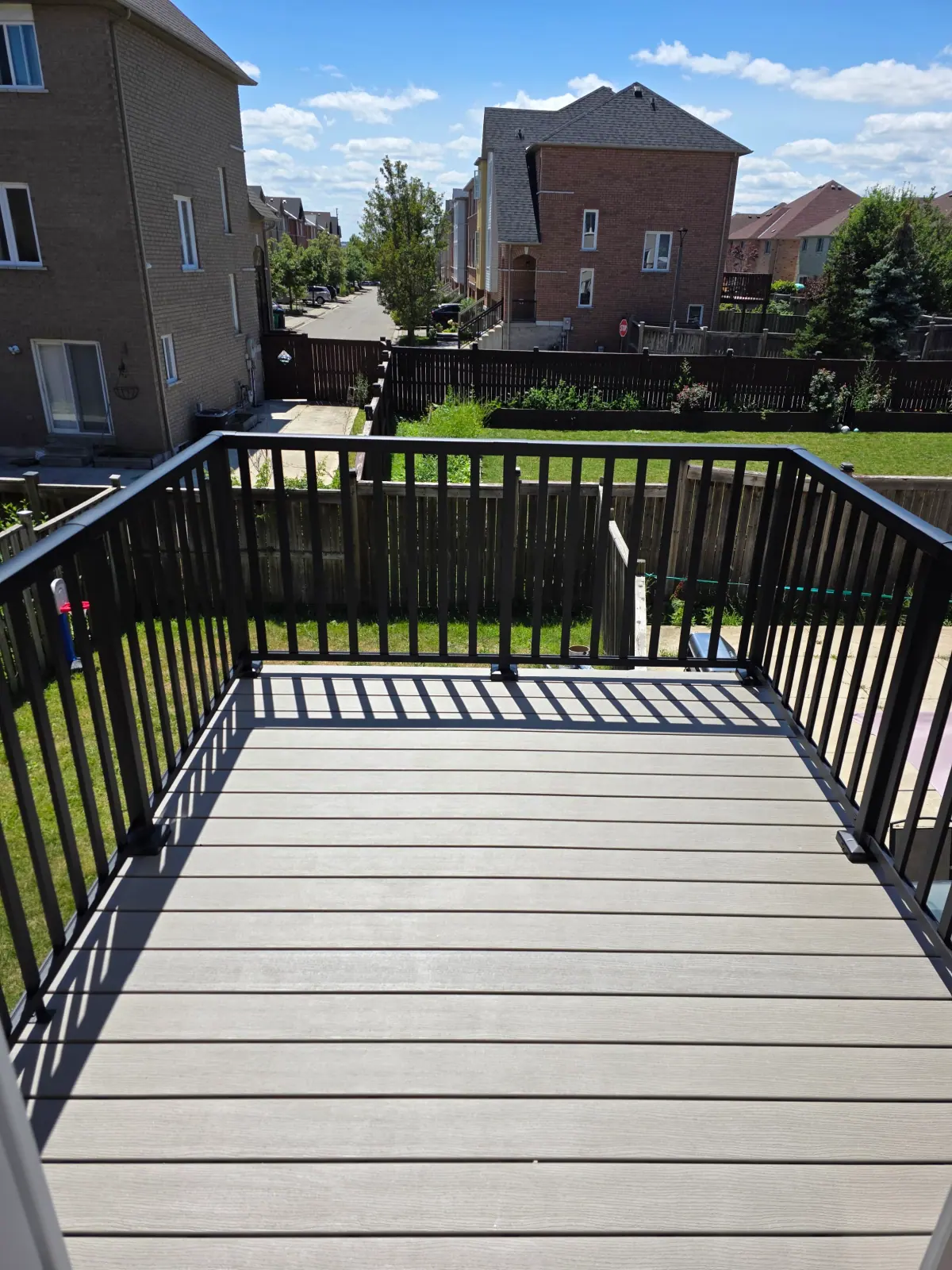
Deck with black railings
A deck surface framed by black railings overlooking a backyard.
View project photos →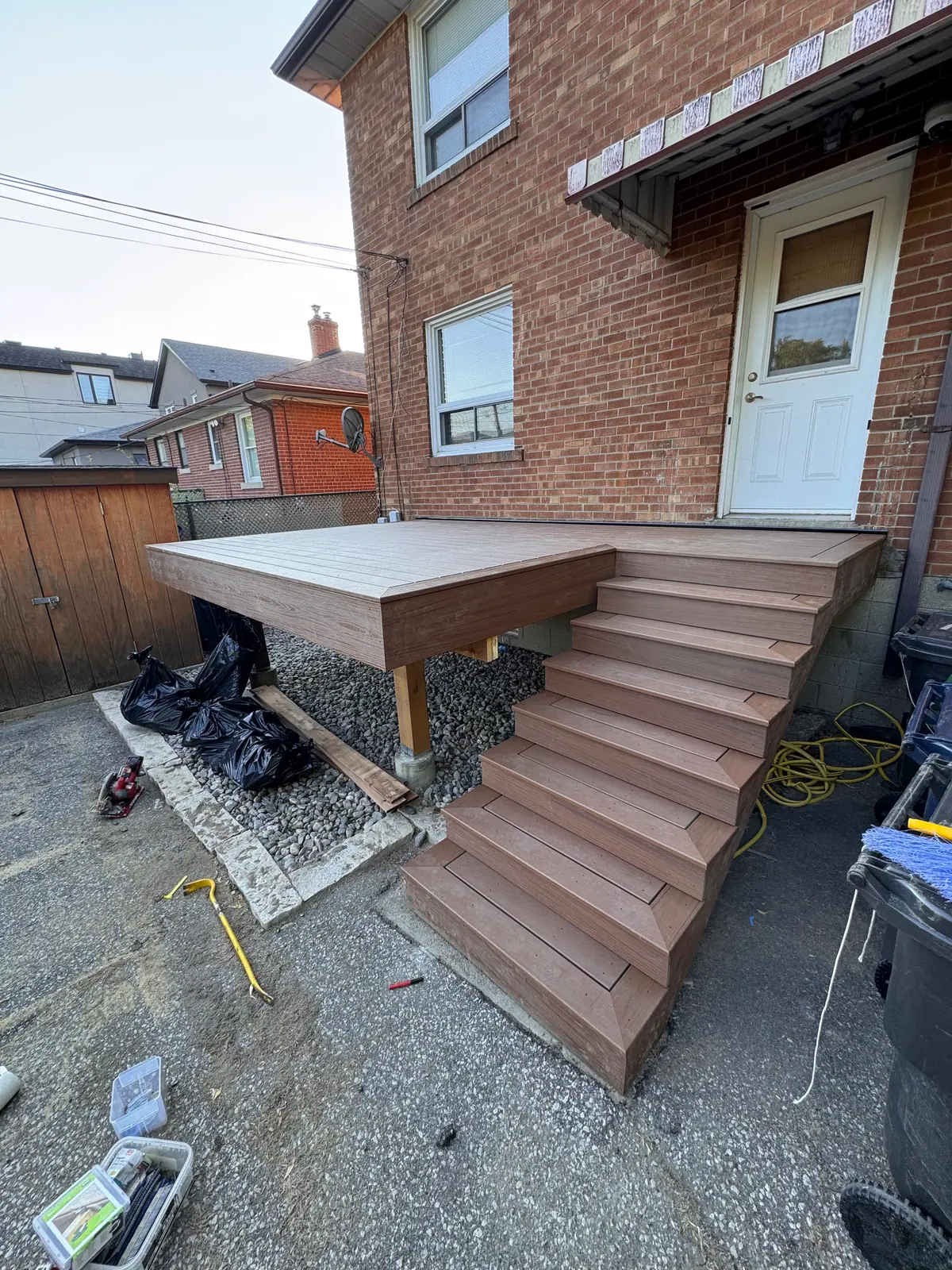
Compact platform deck and steps
A low raised deck and staircase connecting a rear door to the yard.
View project photos →Frequently asked questions
Can I use rock salt on a composite deck?
It depends on the brand. Trex’s care guide says calcium chloride or rock salt can be used, rinsed off when practical. TimberTech says to use calcium chloride and avoid rock salt. Check the care guide for your product before the first storm.
Do I have to shovel my deck after every snowfall?
Not on a properly built deck. Clear the path you use, the stairs and anything against the house. On an older deck, or where drifts and roof snow pile up, clear those heavy spots after a big storm.
Is it bad to leave an outdoor rug or planters on the deck over winter?
Yes. Anything sitting flat on the boards traps water for months, which stains composite and can soften wood. Roll up rugs, empty or raise planters on feet, and store cushions indoors.
When should I re-stain a wood deck?
Wait for spring or early summer, once the wood is dry and the weather is warm enough for the product you’re using. Clean the deck first, and sand it if the surface is grey or rough. Follow the stain maker’s instructions for temperature and drying time.
Further information
Read next
Project planning
What to prepare before asking for a deck-building estimate
Plan the use, dimensions, material preferences and existing-condition questions that make a deck consultation productive.
Read the guide →Project planning
Why fences lean after winter, and what to check this fall
Frost, water and wind do most of the damage to GTA fences. Here is what to look at before freeze-up, what to fix now and what to leave until spring.
Read the guide →Project planning
Can you build a home addition in winter?
Yes, with the right plan. Here’s what changes when an addition is dug, poured and framed in a GTA winter, and why the cold months are also the best time to get design and approvals done.
Read the guide →Let’s talk about your project.
Tell us about your plans, property and preferred timing.